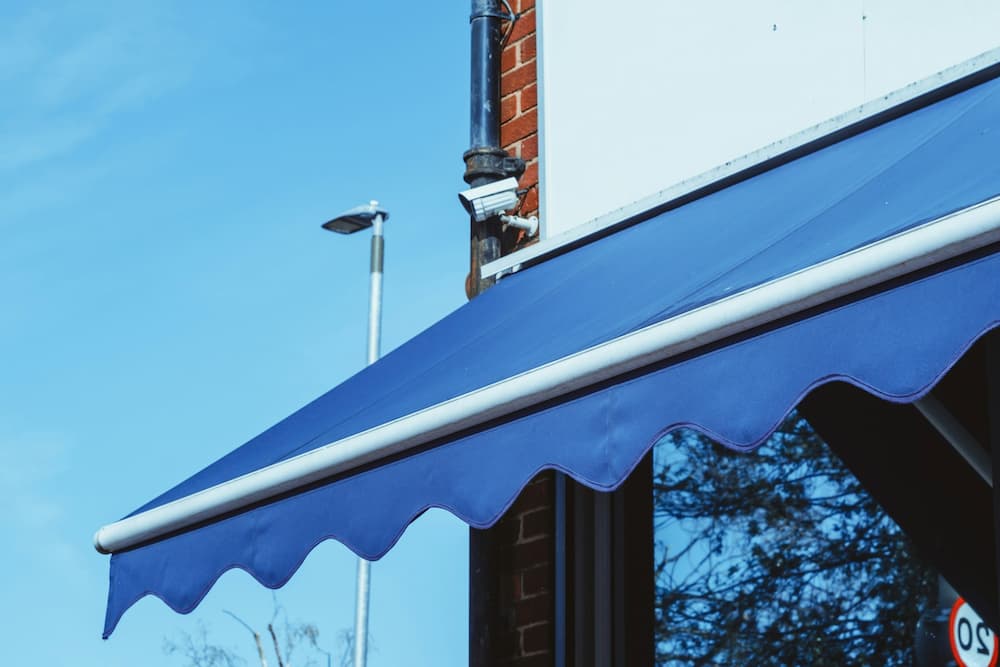
Discovering how to motorize an awning will transform your outdoor space into a more comfortable and accessible refuge. Thanks to the motor, you can open and close your awning with just the touch of a button, eliminating physical effort and adding a modern touch to your home. We tell you in detail everything you need to know and consider when installing a motor on your awning.
Benefits of motorizing awnings
Motorizing an awning on the ground adds convenience, but also improves the functionality and safety of your home. Let’s see what the main benefits are:
Convenience: Control sun exposure by simply pressing a button, eliminating the need for manual adjustment and reducing physical effort.
Protection and durability: The motors allow smoother handling of the awning, which reduces wear and extends its useful life. Furthermore, automated operation avoids sudden maneuvers that could damage the structure.
Improved safety: Some models of motorized awnings include sensors that detect adverse weather conditions, such as strong winds, and automatically retract the awning to prevent damage.
Increase in property value: Installing a motorized system on your awnings can increase the attractiveness and market value of your home, making it more desirable for future buyers.
Advanced automation: With the integration of sensors and timers, you can program the opening and closing of the awning based on time or specific conditions, thereby optimizing energy efficiency and comfort inside your home.
Types of awnings that can be motorized
The motorization can be applied to practically any type of awning, making it more functional and convenient to use. These are the most common types of awnings that can be adapted to work with a motorized system:
Retractable awnings: They are ideal for motorization due to their existing mechanism that facilitates the integration of a motor.
Articulated arm awnings: Commonly used on patios and terraces, these awnings provide extensive coverage and are perfect for motorization. The motor helps you release your arms evenly and effortlessly.
Vertical or enrollable awnings: The motorization allows precise control of its position, which is ideal for controlling direct sunlight and privacy.
Straight point awnings: Although traditionally operated manually, these awnings can also be equipped with motors. They are common on balconies and due to their simple structure, the engine installation is direct and efficient.
Pergolas and mud covers:Pergolas with adjustable mud can be motorized to control the amount of light that penetrates the covered area. The motorization allows you to adjust the mudguards precisely, optimizing the light and air according to the climate.
Selection of the appropriate engine
Choosing the correct motor is important to ensure that your motorized awning works efficiently and without problems. Here we explain how to select the most suitable motor for your type of awning, based on several important criteria.
Engine power considerations
The engine power must be sufficient to handle the weight and extension of the awning without effort. A motor that is too weak will not be able to move the awning efficiently, which could cause wear and premature failure.
Be sure to review the awning manufacturer’s specifications to choose a motor with adequate power.
Adapters required for different types of awnings
Not all awnings require the same type of motor, and some may require specific adapters to ensure perfect compatibility.
It is necessary to check the type of awning steering and choose adapters that allow integration without engine problems, thus avoiding inefficient operations or damage to the system.
Installation process
Installing a motor on an awning requires precision and care to ensure that the system functions correctly and safely. Here I present to you the key steps that you should follow:
Initial evaluation: Before starting, evaluate the condition and structure of the awning to ensure that it can support a motorized system. Check the dimensions and type of awning axle to select the appropriate motor.
Preparation of tools and materials: Make sure you have all the necessary tools at hand before starting, including detornilladores, taladros, saws (if cutting is necessary), and the engine kit that includes all system components.
Dismantling the manual crank: If your awning has a manual crank, you will need to disassemble it to make room for the new motor. This step is crucial to prepare the gear for engine installation.
Motor installation: Place the motor inside the awning eje, ensuring that it is correctly aligned and secured. Adapters must be used if the adapter does not exactly match the engine specifications.
Electrical connection: Makes the electrical connections necessary to power the engine. If you do not have experience in electrical installations, it is recommended that a professional carry out this step to ensure safety.
Adjustments and tests: Once the motor is installed and the electrical connections are made, it is essential to test the awning several times to ensure that the system works correctly. Adjust opening limits as needed to ensure smooth operation.
Configuration of controls and sensors: If your system includes remote controls or sensors, the last step will be to configure them according to the manufacturer’s instructions. This can include the programming of a remote control or the calibration of wind and sun sensors.
Drive and control systems
The drive and control system you choose for your motorized awning will have a significant impact on its ease of use and functionality. We will explore the most popular options to help you make the best decision.
Switch-operation
Switch operation is a reliable and economical option for operating motorized awnings. This system requires simple installation and allows direct control of the awning using a wall switch. It is ideal for users looking for a practical and hassle-free solution for managing their awnings.
Remote control activation
Opting for a remote control provides greater flexibility and convenience, allowing you to control the awning from any place within control range. This option is perfect for those who want to adjust their awning without needing to use a fixed switch, offering more intuitive and accessible operation.
Integration with home automation systems
Integration with home automation systems represents the cutting edge in motorized awning control. It allows you to operate the awning using smart devices, such as smartphones or tablets, and even program its automatic operation depending on the weather or time of day. It is ideal for those who seek maximum automation and want to integrate their awning with other intelligent systems at home.
Identification and solution of common problems
Even with proper maintenance, motorized awnings can experience problems. Here are some of the most common ones and how to solve them:
The awning does not respond to the remote control: Check the batteries of the remote control and ensure that there are no obstructions between the control and the receiver. If the problem persists, it may be necessary to reprogram the control or check the connection with the motor.
Uneven or slow movement: If the awning moves irregularly or gets stuck, check if there are obstructions in the mechanism or if the motor is overloaded. Adjust the tension of the screen if necessary and ensure that the weight of the awning is correctly distributed.
Extraneous noises during movement: Noises may indicate that a part is worn or poorly lubricated. Inspect the engine and mechanical connections to locate the noise source and carry out necessary adjustments or replacements.
At Motoriza24H, we are committed to offering you optimal solutions for the motorization of your awnings, guaranteeing comfort and efficiency. Explore our range of engines and accessories to find the perfect system that suits your needs. Take advantage of our experience and technical assistance to improve and automate your outdoor spaces with ease and confidence.
Choosing the right motor for your blinds is crucial for optimizing the functionality and efficiency of your home or business. In this post, we’ll help you understand the different types of motors, their features, and how to select the most suitable one based on the type of blinds, their weight, and your preferred activation system. […]
A roller shade motor that won’t stop is a common problem in motorized systems that can interrupt your work or your daily use of the roller shade. This malfunction is usually related to misaligned limit switches, wiring issues, or motor overheating. To resolve this issue, it’s essential to correctly diagnose the cause. Throughout this article, […]
Has your electric blind ever malfunctioned and gotten stuck up? Here we’ll tell you all the effective methods for manually lowering an electric blind in case of automatic system failures. We’ll also give you some maintenance tips to help minimize the occurrence of these types of problems. Join us! What are electric blinds? Electric blinds […]